Nasal Strips vs. Mouth Tape: Which Actually Works in 2026?
An ENT-authored, sleep-medicine-reviewed side-by-side comparison of nasal strips and mouth tape — what each does, who they help, what the evidence shows, and when mouth tape is unsafe.


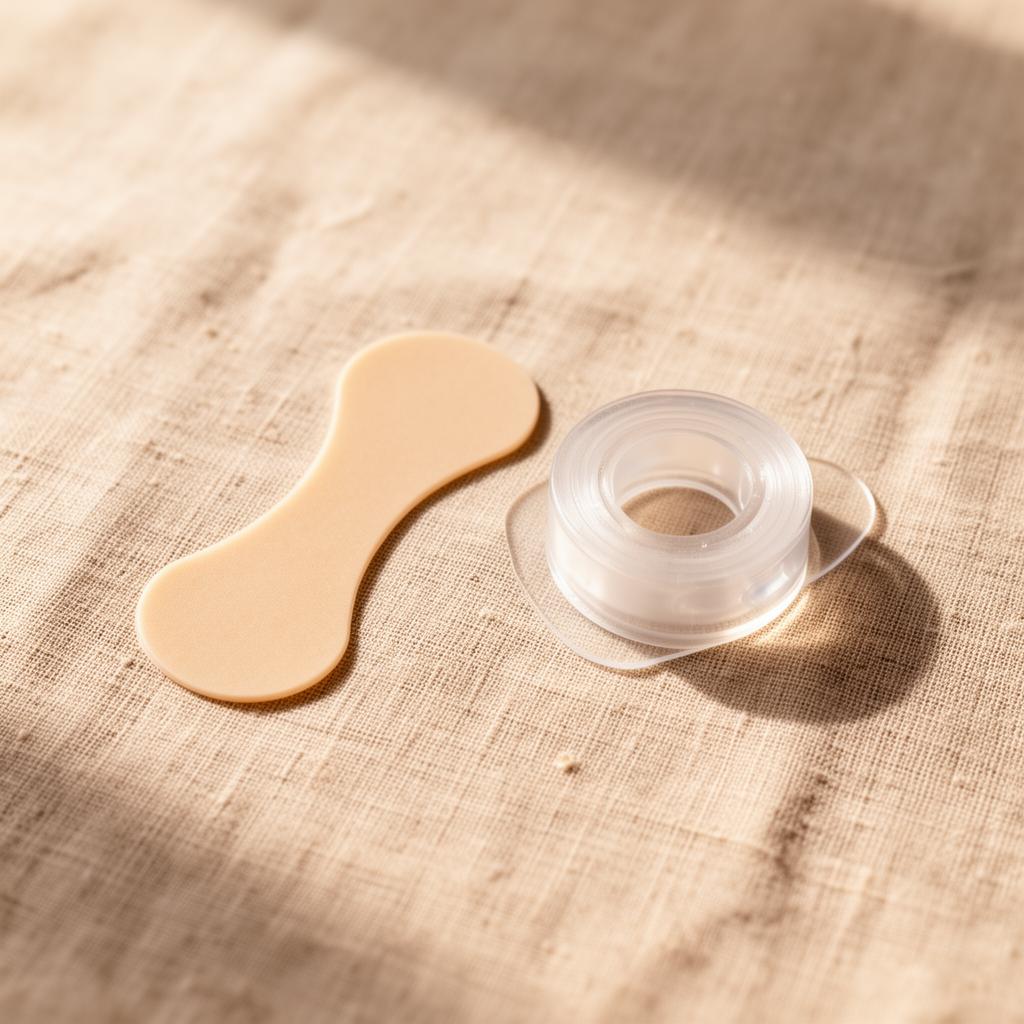
Nasal strips and mouth tape are the two most-bought over-the-counter sleep aids of the past few years. They look like opposites — one opens the nose, the other closes the mouth — but they are usually marketed for the same outcome: quieter, deeper sleep. Patients arrive in clinic confused about which to try, whether to combine them, and which one the research actually supports.
This article is a side-by-side clinical comparison. It covers what each device does, who benefits from which, what the published evidence shows for snoring, sleep quality, and oral health, and the specific safety considerations for mouth tape that nasal strips do not share.
Key takeaways
- Nasal strips widen the nasal valve from outside the nose. Mouth tape physically discourages mouth opening during sleep.
- They solve different problems. Nasal strips address nasal-airway resistance. Mouth tape addresses habitual mouth breathing in a person whose nose is already patent.
- Evidence for nasal strips on mild snoring is modest but real. Evidence for mouth tape is much thinner and largely limited to small short-term studies.
- Mouth tape is unsafe in anyone with significant nasal obstruction, untreated obstructive sleep apnoea, alcohol or sedative use at night, gastro-oesophageal reflux with regurgitation, or a child without specialist supervision.
- For most adults who want to try something, a nasal strip alone is the safer first step. Combining the two is reasonable only in a person with a clearly patent nose and no red flags.
What each device actually does
A nasal strip is an external nasal dilator. It is a flexible spring band held to the bridge of the nose by adhesive. It exerts gentle outward tension on the lateral walls of the nose, widening the narrowest part of the upper airway — the nasal valve — by a small but measurable amount. The mechanism is mechanical and the effect on nasal airway resistance has been confirmed by acoustic rhinometry and rhinomanometry studies [1].
Mouth tape is, mechanically, much simpler. A small strip of skin-friendly tape is placed across the lips to discourage the mouth from falling open during sleep. It does not strengthen the jaw, alter palate tone, or treat any anatomical problem. Its only function is to make mouth breathing slightly more effortful than nasal breathing, so a sleeping brain that has the choice tends to default to the nose.
The difference matters. A nasal strip changes the airway. Mouth tape changes a behaviour. They are not substitutes for each other.
Snoring: what the evidence shows
The honest summary for nasal strips is that they produce a modest, partner-reported reduction in snoring loudness in patients whose snoring originates at the nasal valve. Classical trials by Ulfberg and Fenton, and subsequent reviews, consistently find a real but small effect against placebo strips [2]. Strips do not treat obstructive sleep apnoea.
The evidence base for mouth tape is much smaller and weaker. A 2022 study in patients with mild obstructive sleep apnoea reported reduced snoring and a small reduction in apnoea-hypopnoea index with mouth taping, but the sample was small and the participants were prescreened for adequate nasal patency [3]. There are no large randomised controlled trials comparing mouth tape with placebo in primary snorers. Marketing claims of "70% snoring reduction" are not supported by the published data.
In direct head-to-head terms, no high-quality trial has yet compared nasal strips and mouth tape against each other for snoring. Clinically, the choice should be driven by where the symptom comes from, not by which device has the more polished packaging.
Side-by-side comparison
| Question | Nasal strip | Mouth tape |
|---|---|---|
| What it does | Widens the nasal valve | Discourages mouth opening |
| Best for | Mild nasal-origin snoring, nasal congestion at night | Habitual mouth breathing in a person with a clear nose |
| Treats sleep apnoea? | No | No |
| Safety in nasal obstruction | Safe; may help slightly | Unsafe — do not use |
| Safety with alcohol or sedatives | Safe | Unsafe — do not use |
| Reusable | Mostly single-use | Single-use per night |
| Typical cost in India | ₹150–₹600 per pack | ₹400–₹1,200 per pack |
| Evidence base | Moderate, decades old | Limited, mostly small recent studies |
When to choose a nasal strip
A nasal strip is the more appropriate first device for any of the following patient profiles.
The patient with mild snoring that the partner describes as soft and continuous rather than loud and irregular, particularly when the patient also reports a stuffy nose at night or during pollen and dust mite season.
The patient with allergic rhinitis whose nose is more obstructed in the supine position at night. A strip will not treat the underlying rhinitis but can provide adjunctive symptomatic relief alongside saline irrigation and, where appropriate, an intranasal corticosteroid.
The patient who fails the Cottle manoeuvre test — that is, gently pulling the cheek laterally near the nose during inspiration produces a clear improvement in airflow. This finding suggests the nasal valve is contributing to the obstruction and predicts response to a strip.
The patient on CPAP therapy for obstructive sleep apnoea whose mask comfort and pressure tolerance might improve with a small reduction in nasal resistance. This use should be discussed with the prescribing physician.
When mouth tape might help
Mouth tape is appropriate only after specific conditions are met. The nose must be reliably patent at night. The patient must not have features of obstructive sleep apnoea. There must be no alcohol or sedative use in the hours before sleep. There must be no significant reflux or regurgitation. The patient must be an adult who has consented to the practice and who can remove the tape easily if needed.
Within that narrow group, the candidates who tend to do best are habitual mouth breathers who wake with a dry mouth, sore throat, or morning bad breath, and whose partners describe quiet open-mouth breathing rather than loud snoring with witnessed pauses.
When mouth tape is unsafe
Several groups should not use mouth tape under any circumstances.
Anyone with significant nasal obstruction — including untreated allergic rhinitis with severe congestion, nasal polyps, significant deviated septum, or recent nasal surgery. Forcing nasal-only breathing in an obstructed nose impairs ventilation rather than improving it.
Anyone with suspected or confirmed obstructive sleep apnoea who is not on adequate treatment. Mouth tape does not treat OSA, and in some patients it may worsen oxygen desaturation by removing the mouth as a rescue route.
Anyone consuming alcohol, sedatives, opioids, or muscle relaxants before sleep. These agents depress arousal and impair the protective response to airway obstruction.
Anyone with significant gastro-oesophageal reflux, particularly those who experience nocturnal regurgitation. The risk of aspiration is materially increased when the mouth is taped.
Children, who should not be mouth-taped outside of formal paediatric specialist supervision. Sleep-disordered breathing in children has a different aetiology and requires evaluation, typically including assessment of adenotonsillar size.
Anyone with a beard, sensitive perioral skin, recent dental work, or any condition that might require oral access during the night.
Can you combine them?
In selected patients, yes. The clinical logic is that a nasal strip enlarges the nasal airway just enough to make mouth tape tolerable in a person whose nose was borderline at baseline. This combination should only be considered in adults who have already demonstrated they can sleep comfortably with each device individually, who have no red-flag features for sleep apnoea, and who have no contraindications to mouth tape.
The combination is not a magic solution. It does not treat sleep apnoea. It does not justify skipping a sleep study in a patient with red flags. And it does not produce results superior to addressing the underlying problem when one exists.
Practical guidance
For most adults asking which to try first, the clinically reasonable order is the following.
Start with a standard adhesive nasal strip for seven consecutive nights. Apply it correctly — high on the bridge of the nose, above the flare of the nostrils, on clean dry skin. Ask the partner for honest feedback on snoring before and after.
If snoring improves but mouth breathing persists, and you are an adult with no red flags and no contraindications, you may then trial mouth tape alongside the strip for a further week. A small horizontal strip of skin-friendly tape across the centre of the lips is sufficient. Full-mouth occlusion is not necessary.
If snoring does not improve, if the partner reports gasping, choking, or pauses in breathing, or if you have unrefreshing sleep or daytime sleepiness, stop self-treatment and book a sleep evaluation [4].
Bottom line
Nasal strips and mouth tape solve different problems. The strip changes the airway; the tape changes a behaviour. For most patients the more useful first step, and the safer one, is a properly applied nasal strip. Mouth tape can be added in a carefully selected group of adults whose nose is patent and who have no red flags for sleep apnoea, but it is not a treatment for any underlying disease.
No over-the-counter device replaces evaluation by an ENT or sleep physician in a patient with disruptive snoring, witnessed apnoeas, or daytime sleepiness. The most reliable improvement in sleep almost always comes from identifying and treating the actual cause of the symptom, not from layering devices on top of an unaddressed problem.
Medical disclaimer. The information in this article is for educational purposes only and is not a substitute for professional medical advice, diagnosis, or treatment. Always seek the guidance of your physician or another qualified health provider with any questions you may have about a medical condition or treatment.