Featured · Pillar Guide · May 18, 2026
Nasal strips: a complete clinical guide for 2026
What an ENT actually thinks of nasal strips — how they work at the nasal valve, who they help, who they don't, and how to use one correctly.

Written and reviewed by an ENT surgeon and a sleep physician. Plain-English answers to what actually works for breathing, snoring, and deeper sleep — no hype.
What an ENT actually thinks of nasal strips — how they work at the nasal valve, who they help, who they don't, and how to use one correctly.
Nitric oxide, CO₂ tolerance, calmer nights — the science of nasal breathing in five minutes.

The nasal valve, the mechanism, and what the research really shows — minus the marketing spin.

A clinician-led look at what the studies show, who benefits, and the red flags that mean it's time to see a sleep doctor.
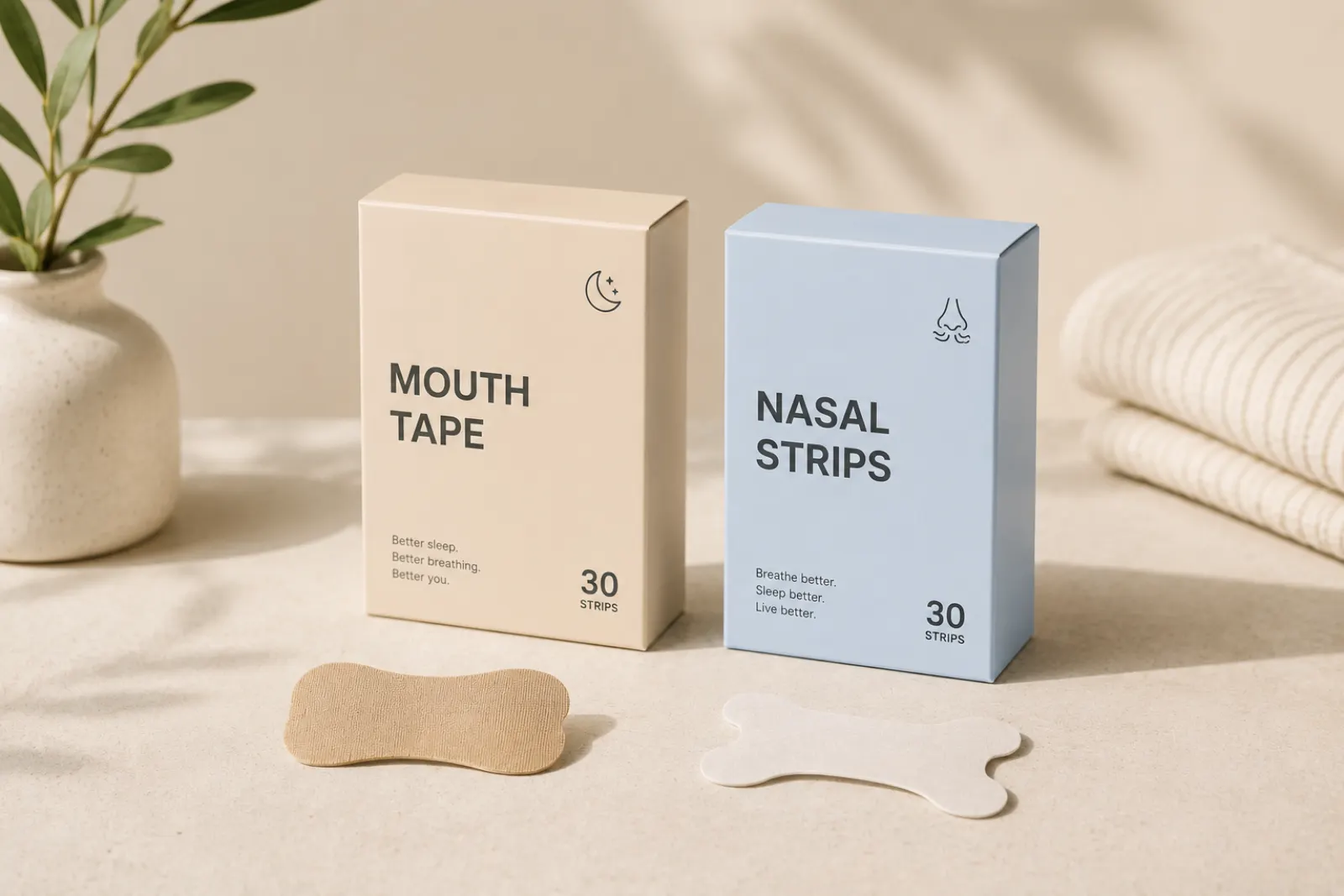
Everything an ENT wants you to know — how they work at the nasal valve, who they help, and the evidence behind the claims.
What the studies actually show about snoring strips — who benefits, who doesn't, and when snoring needs a sleep study.
An ENT walks through the mechanism at the nasal valve and what the published research really shows for snoring, breathing, and sleep.
Side-by-side: what each device does, who benefits, what the evidence shows, and the groups for whom mouth tape is unsafe.
An ENT on why a strip cannot fix a deviated septum, when it still helps, and the red flags that mean it is time for a specialist.
What the studies show on VO₂ max, perceived exertion, and recovery — and the runners and cyclists who genuinely benefit from a strip.
An ENT on the real side effects, who should avoid them, and whether nightly long-term use causes any harm to the nose.
The five-minute case for nasal breathing — nitric oxide, CO₂ tolerance, and why your nose was built for this.